Which pregnancy pillow should you buy, and when should you start using one?
Updated .
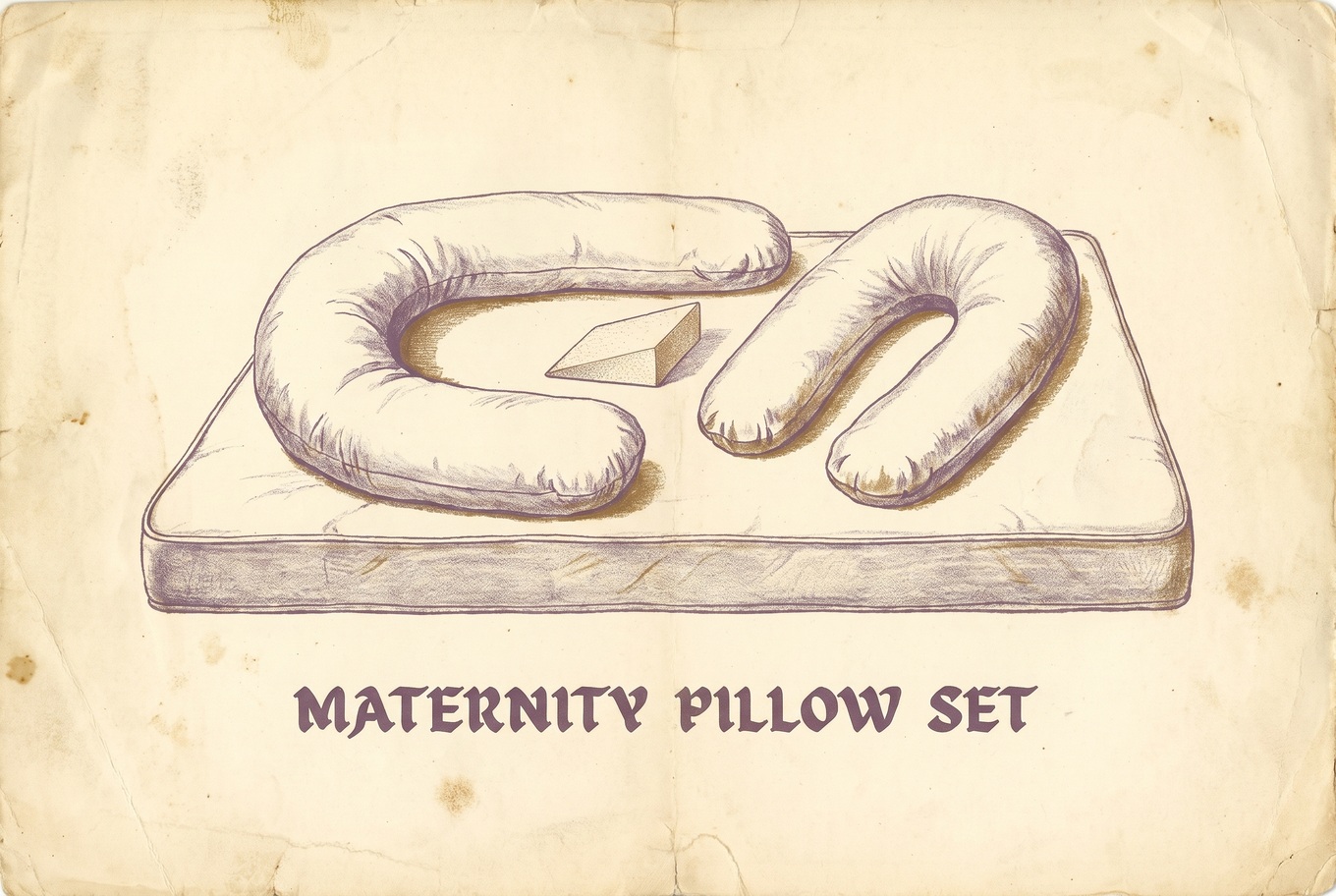
A pregnancy pillow is a long, shaped cushion that holds a sleeper on one side while it props the bump, back and knees. Nobody needs one to sleep safely. Many people find side sleeping much easier with one, though, and the reason to sleep on your side late in pregnancy is well studied.
Short answer: Start when lying on your back stops being comfortable, which for many people is the second trimester, and have a setup ready by 28 weeks. After 28 weeks, falling asleep on your back can double the risk of stillbirth (NHS), and a pooled analysis linked it to 2.63 times the odds of late stillbirth compared with the left side (Cronin et al., 2019). A full body pregnancy pillow is one way to stay on your side. Two regular pillows can do the same job.
This guide is for: people in the second or third trimester, and partners shopping with them, who want side sleeping to feel easier.
Key Takeaways
Three points carry most of the decision: when to start, why side sleeping matters, and what a pillow can and cannot do for you.
- 28 weeks is the line the NHS draws. It says the safest position to go to sleep is on your side, left or right, and that after 28 weeks falling asleep on your back can double the risk of stillbirth.
- 2 randomized trials published in 2026 in BMC Pregnancy and Childbirth found that people in a first pregnancy reported more comfort with a pregnancy pillow late in pregnancy. One also found better sleep scores and the other found less fatigue.
- 4 of the 17 seller pages we read on 2026-09-27 stated both a full size and a weight for their full body pregnancy pillow. That leaves most shoppers guessing how firm and how bulky a pillow will be, so plan to ask before you pay.
On This Page
Eight questions, in the order most people ask them, from timing through shape and size to safety once the baby is home with you.
How far along should you be before using a pregnancy pillow?
Start when lying on your back stops feeling right, often in the second trimester, and have a side-sleeping setup ready by 28 weeks.
No guideline tells you when to start using the pillow itself. What it gives you is a position. ACOG says sleeping on your side during the second and third trimesters may be best, and suggests keeping one or both knees bent (ACOG). The NHS draws a firmer line later in pregnancy, as the Key Takeaways above set out.
So the answer comes in two parts. Start when the bump makes the old position uncomfortable, because early on comfort is the only signal that matters. Then get side sleeping to feel normal before the third trimester begins. A new sleep habit takes time to settle, and it helps to have it in place before the advice firms up.
Back pain is usually what nudges people. One meta-analysis found back pain in close to half of pregnancies by the third trimester (BMC Pregnancy and Childbirth). If you wake with a sore back, that is a sensible time to try one.
| Stage | What the guidance says | What a pillow adds |
|---|---|---|
| First trimester | No position rule in the ACOG or NHS advice we read | Nothing most people need yet |
| Second trimester | Side sleeping may be best (ACOG) | Props hips, knees and a growing bump |
| From 28 weeks | Go to sleep on your side, left or right (NHS) | Makes the side position easier to keep |
Why does sleeping on your side matter after 28 weeks?
Studies link going to sleep on your back late in pregnancy with higher stillbirth risk, and either side appears equally safe for you.
The concern is blood flow. In late pregnancy, lying on your back presses on major blood vessels, which can reduce blood flow to the uterus and the oxygen supply to your baby (Safer Baby).
The strongest evidence pools five case-control studies. Going to sleep on the back more than doubled the odds of late stillbirth, and the right side had similar odds to the left (Cronin and colleagues).
Not every study agrees. Timing explains much of the gap. A large US cohort of first pregnancies asked about position only up to the early third trimester. It found no association between going to sleep on the back or right side and stillbirth (Silver and colleagues). The risk signal belongs to late pregnancy.
The rule is about how you fall asleep, not how you wake. Changing position in your sleep is normal. Start every sleep on your side and roll back over if you wake on your back.
| Study | Design | Who | Finding |
|---|---|---|---|
| Cronin et al. | Pooled case-control data | Five studies, third trimester | Back: 2.63 times the odds vs left; right similar to left |
| MiNESS study | Case-control, UK | 291 stillbirths and 735 live births | 2.3-fold risk of late stillbirth on the back vs side |
| Silver et al. | Prospective cohort, US | First pregnancies | No link found before the final weeks |
Does a pregnancy pillow improve sleep, according to trials?
Two trials in first pregnancies found a pillow raised comfort scores late in pregnancy; neither tested stillbirth or safety outcomes.
Until recently, nobody had tested the pillow itself. Two randomized trials now have, both with people in a first pregnancy at hospitals in Turkey. In the first, the mean comfort score was clearly higher in the pillow group than in the control group. The pillow group also had lower sleep-quality index scores, which means better sleep (BMC Pregnancy and Childbirth).
The second trial also enrolled people in a first pregnancy. It found that using a pregnancy pillow enhanced comfort and decreased fatigue (BMC Pregnancy and Childbirth).
Read both for what they are. A pillow cannot be hidden from the person sleeping on it, so both results rest on questionnaires people filled in about themselves. The first trial's authors say the findings should be read within the context of the study population, a single group of first-time mothers.
So where does that leave you? A pregnancy pillow is a comfort tool. The safety benefit in the stillbirth research comes from the side position, and a pillow is only one way to hold it. If you already sleep well on one side with ordinary pillows, these trials give you no reason to buy anything new.
Which pregnancy pillow shape fits how you sleep?
Pick the shape by what you need held: a C or J props one side, a U holds both, and a wedge only lifts the bump or supports the back.
Shape decides two things: what gets held and how much of the bed goes with it. A C shape wraps the head, bump and knees along one side. A U shape puts a wall at the back and another at the front. Turning over means you roll inside it. A J shape sits between the two. A wedge holds only the bump or the back, and it takes the least room.
If you share a bed, width is the real cost. The U-shaped pillow in the size table below is about three feet wide, a large share of any shared mattress. People who switch sides often get something for that width. Someone who stays on one side will probably do fine with a C shape or a straight pillow.
The last two columns are our judgement from the shapes. No maker publishes them, and nothing was tested here.
| Shape | What it holds | Bed space | Our judgement |
|---|---|---|---|
| C | Head, bump and knees on one side | Large | Suits people who mostly stay on one side |
| U | Back and front together | Largest | Suits frequent side-switchers with room to spare |
| J | Head, bump and knees, open back | Medium | A middle path if a U is too wide |
| Wedge or two-piece | Bump, back or both | Small | Suits small beds, travel and warm sleepers |
| Straight body pillow | Knees, plus something to hug | Narrow | The cheapest way to test side sleeping |
How big is a full body pregnancy pillow?
The pages we read list lengths from 4 to about 5 feet, which is roughly two standard 20 by 26 inch bed pillows laid end to end.
Sizes vary more than the photos suggest. The C-shaped pillow in the table is the shortest, and the U-shaped one runs about a foot longer with far more width. That difference shows up every night if you share a bed.
Height matters as much as length. In our judgement, a thicker pillow sets the top knee higher, which tends to suit wider hips. A thinner one suits a narrow frame. Look for the third dimension on the page, because it tells you how high the pillow sits.
Check how you will wash it first. Boppy's page says its Total Body pillow fits in most washing machines, yet its care notes for the pillow say to use a commercial-size washer or dryer (Boppy). A big U shape may need a laundromat too. For hot sleepers, the cover matters more than the size; see does a cooling body pillow keep you cool all night.
| Pillow | Shape | Stated size | Stated weight or fill | Stated price |
|---|---|---|---|---|
| Boppy Total Body | C | 48 x 26 x 7.5 in (Lullabye Shop) | 4.67 lb (REBEL) | $59.99 (Lullabye Shop) |
| Cheer Collection U | U | 59 in long, 36 in wide, about 5 in thick (Cheer Collection) | 2800 grams of fill (Cheer Collection) | $59.99 sale price (Cheer Collection) |
| ChillMom | C+U | 61 in along the curve, 30 in across (The Pillow Home) | Not stated | Not in the text we read |
The Cheer Collection fill weight and sale price are as its page showed them on 7 October 2026. We missed both on our first read.
What do sellers' pages leave out about pregnancy pillows?
We counted what 17 seller pages state in words. Fewer than a quarter gave both a full size and a weight, so ask before you buy.
We read 17 seller product pages for full body pregnancy pillows on 2026-09-27, all found through search. For each page we counted what it stated in words about size and weight. When two retailers sold the same pillow, we counted both pages, because each is a page a shopper might land on. We did not weigh, measure or test anything.
| What the page stated | Pages | Share |
|---|---|---|
| Three dimensions and a weight | 4 | 24% |
| A size, but no pillow weight | 8 | 47% |
| No size in words | 5 | 29% |
The same pillow can read differently from page to page. One retailer's listing for the Boppy Total Body gave its three dimensions (Lullabye Shop). Another gave the same dimensions plus a weight (REBEL).
Several pages in the middle group gave only a length in the product title. A length alone tells you almost nothing about bed space, since width decides how much of the mattress goes. Before you buy, ask for the weight and the thickness. In our judgement, those two numbers say the most about how firm the pillow will feel and how high it will hold a knee.
One limit on this count: sizes shown only in photos or diagrams were not counted. A page in the last group may show its size in a picture. Check the images before you rule a pillow out.
Can regular pillows do the job of a pregnancy pillow?
Yes, for many people. ACOG suggests one pillow between your knees and another under your belly, which costs nothing if you own two already.
Often they can. ACOG says it may help to place a pillow between your knees and another under your belly, or to try a full-length body pillow (ACOG). A hospital system's own health site puts it bluntly: among the many pillows marketed to pregnant women, there is no one "best pillow." (UPMC HealthBeat).
Try the free version first. Lay one standard pillow lengthwise between your knees and ankles so your top leg sits level. Fold a second one under your bump. A third pillow wedged behind your back stops you rolling onto it.
A dedicated pillow earns its price in three situations:
- Your loose pillows slide away and need rebuilding in the night.
- You keep waking on your back, and a wall behind would help.
- You want back and front support without assembling it every night.
If any of those sounds familiar, one full body pillow replaces a pile of loose ones and stays put through a turn. If none does, keep your money. Ordinary pillows already give you the position the research cares about.
Is it safe to use a pregnancy pillow after the baby arrives?
Yes for you, as a prop while you feed, rest or recover. Never for the baby: a soft pillow is not a safe place to lay an infant down.
It stays useful to the parent. A long pillow is handy for propping an arm while feeding, or for resting while you recover from the birth.
The baby is a different matter. Consumer Reports, covering the federal safety rule for nursing pillows, says nursing pillows are not a safe sleep environment for infants. Using them for sleep raises the risk of suffocation and sudden unexpected infant death (Consumer Reports).
A pregnancy pillow is a different product. It shares the hazard, though, because it is soft, long and shaped to fit around a body. The same logic applies to it.
So keep a few firm rules once the baby is home. Never lay your baby on the pillow or against it, even for a moment. When the baby sleeps in the same room, take the pillow out of the bed if you might doze off during a night feed. If a feed happens in the adult bed, clear the pillow away first. Put your baby down to sleep alone, on their back, in a crib or bassinet.
Common questions
Short answers to the questions people ask most often once they have chosen a shape and started sleeping with a pregnancy pillow.
Is the left side better than the right side?
Not on current evidence. In the pooled analysis, the right side had similar odds to the left (Cronin and colleagues), and the NHS says either side is fine. Choose the side that is easiest for you to stay on.
What if I wake up on my back?
Roll onto your side and go back to sleep. It is normal to change position during sleep, and many pregnant women wake up on their back (Safer Baby). The advice covers the position you settle into.
Can I use a pregnancy pillow in the first trimester?
Yes. Neither the ACOG nor the NHS advice we read sets a position rule that early. Use one whenever it helps you, though plenty of people never need one until the bump grows.
Is a pregnancy pillow the same as a body pillow?
Mostly. A pregnancy pillow is a body pillow shaped to hold a bump. A straight one supports the knees and costs less; see what a body pillow is and what body pillow works for side sleepers.
How do I wash a full body pregnancy pillow?
Follow the care instructions for your own pillow. Boppy says to wash the slipcover separately on a delicate cycle with mild detergent, then tumble dry low (Boppy).
Does a pregnancy pillow help with back pain?
It may, but neither trial above measured back pain directly. One meta-analysis found low back and pelvic pain in nearly two in three pregnancies (lumbopelvic pain meta-analysis), and supported side-sleeping is listed among the standard management options (BMC Pregnancy and Childbirth). Pain that wakes you every night is worth raising with your prenatal care provider.
Sources
Gathered here, the outside pages this body pillow guide quotes, each beside the part of the guide that needed it.
- NHS (nhs.uk), needed in “How far along should you be before using a pregnancy pillow?”.
- Cronin et al., 2019 (doaj.org), needed in “Why does sleeping on your side matter after 28 weeks?”; “Common questions”.
- ACOG (acog.org), needed in “How far along should you be before using a pregnancy pillow?”; “Can regular pillows do the job of a pregnancy pillow?”.
- BMC Pregnancy and Childbirth (pmc.ncbi.nlm.nih.gov), needed in “How far along should you be before using a pregnancy pillow?”; “Common questions”.
- Safer Baby (saferbaby.org.au), needed in “Why does sleeping on your side matter after 28 weeks?”; “Common questions”.
- Silver and colleagues (pmc.ncbi.nlm.nih.gov), needed in “Why does sleeping on your side matter after 28 weeks?”.
- MiNESS study (mft.nhs.uk), needed in “Why does sleeping on your side matter after 28 weeks?”.
- BMC Pregnancy and Childbirth (pmc.ncbi.nlm.nih.gov), needed in “Does a pregnancy pillow improve sleep, according to trials?”.
- BMC Pregnancy and Childbirth (link.springer.com), needed in “Does a pregnancy pillow improve sleep, according to trials?”.
- Boppy (boppy.com), needed in “How big is a full body pregnancy pillow?”; “Common questions”.
- Lullabye Shop (lullabyeshop.com), needed in “How big is a full body pregnancy pillow?”; “What do sellers' pages leave out about pregnancy pillows?”.
- REBEL (fromrebel.com), needed in “How big is a full body pregnancy pillow?”; “What do sellers' pages leave out about pregnancy pillows?”.
- Cheer Collection (cheercollection.com), needed in “How big is a full body pregnancy pillow?”.
- The Pillow Home (thepillowhome.com), needed in “How big is a full body pregnancy pillow?”.
- UPMC HealthBeat (share.upmc.com), needed in “Can regular pillows do the job of a pregnancy pillow?”.
- Consumer Reports (advocacy.consumerreports.org), needed in “Is it safe to use a pregnancy pillow after the baby arrives?”.
- lumbopelvic pain meta-analysis (pmc.ncbi.nlm.nih.gov), needed in “Common questions”.