Does a cooling body pillow keep you cool all night?
Updated .
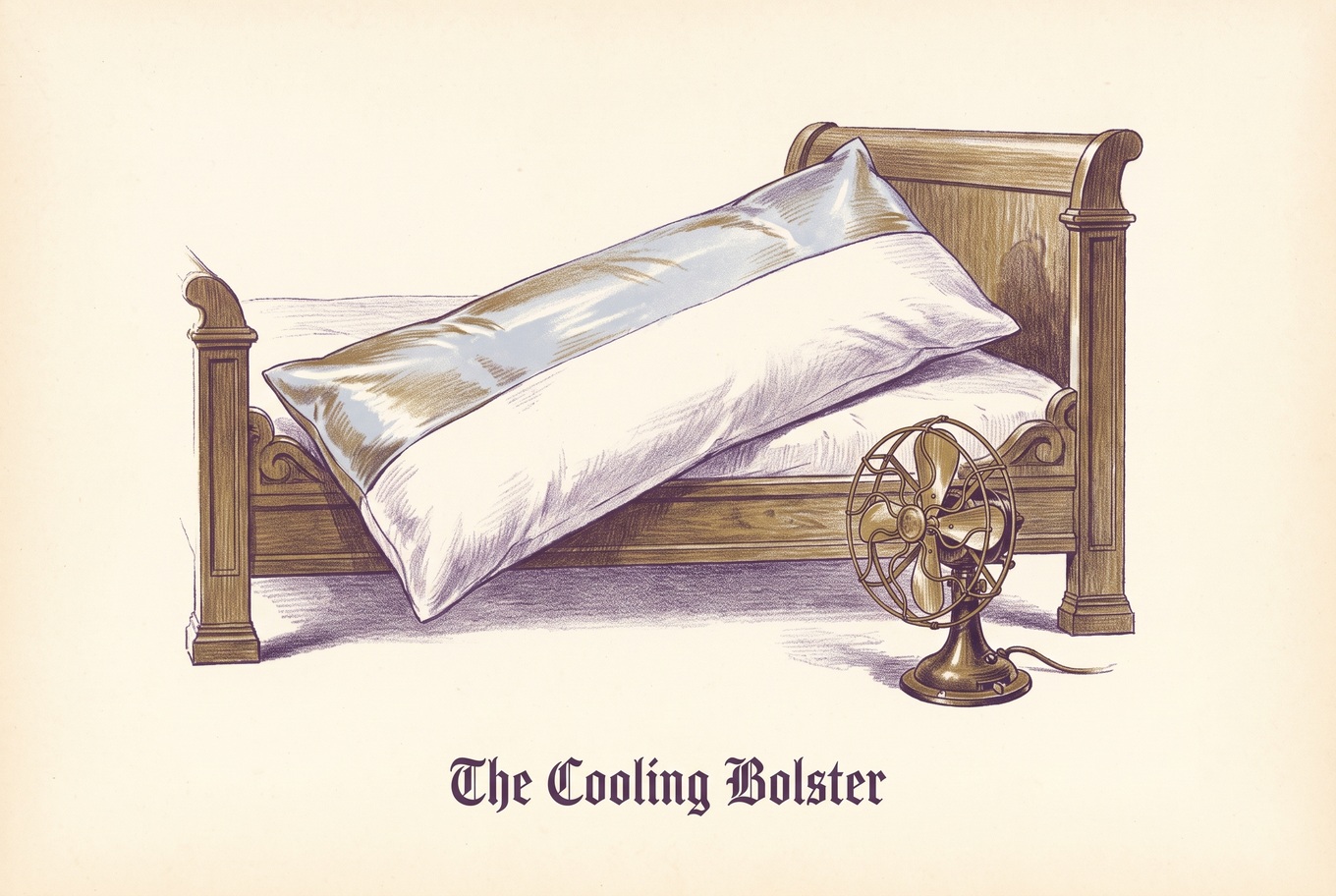
A cooling body pillow is the usual long pillow, most often 20 by 54 inches like this Walmart listing, sold with a cover, fill or gel meant to feel cool on your skin. Will that feeling last until morning? Sleep research, a US textile test standard and the listings themselves give a fairly clear answer.
Short answer: Not all night. A cooling body pillow feels coolest in the moment you lie on it. As the hours pass it warms toward your own skin temperature. Only 2 of the 9 US listings we read published any cooling figure, and neither named the lab behind it. A review of nine studies found that cooling mattresses and toppers did not change measured sleep stages (Frontiers in Sleep, 2025). Your bedroom temperature and your cover fabric do more of the work.
This guide is for: people who wake up hot next to a body pillow, whether from menopause, a warm summer bedroom or dense foam, and who want to know which cooling claims to trust.
Key Takeaways
Three findings from the research and product pages we read, each with the figure behind it, so you can act on them before reading on.
- Only 2 of the nine listings for cooling body pillows and covers that we read published a cooling figure. The other seven named a material or nothing at all. Read "cooling" on a label as a description of how the fabric feels. It is not a measured result, and you should not expect it to promise a whole night.
- A bedroom of about 60 to 67°F is the range a Cleveland Clinic sleep specialist says is often recommended for sleep (Cleveland Clinic, 2026). A pillow cover works inside that range. It cannot stand in for it, however cold it feels in the shop.
- Hot flashes occur in up to 80% of women during menopause, lasting a mean of 7 to 10 years (The Menopause Society). That is why so many cooling pillows are sold to women in menopause. With night sweats, a cool cover you can flip helps once you are awake. It does not stop the sweat before it starts.
On This Page
The eight questions this page answers, in order, each worded exactly as its heading so you can jump to the one you came to ask.
The first four sections explain how cooling works and what the numbers on listings mean. Our count of product pages is in the fifth section, with a table sorting each page by what it stated. The last three cover the research, who is likely to notice a difference, and daily habits. If you only want a buying rule, read the section on Q-max and then the count. Then you know what to check.
What makes a body pillow a cooling body pillow?
A cooling body pillow is a regular long pillow with a cover, fill or gel chosen to feel cooler on contact. Nothing in it makes cold.
Take the label away and it is the same long pillow described in what a body pillow is. The difference lies in the materials. Makers use three routes, and many products combine two of them.
A cool-touch cover is knitted from slick synthetic yarn, often a nylon-polyethylene blend, as on this Degrees of Comfort body pillow case. Gel-infused fill mixes gel into shredded memory foam. The Nestl body pillow at Walmart pairs that fill with a cool-touch cover. Phase change material is a coating or fiber that soaks up heat while it melts at a set temperature.
None of these makes cold. Each one takes heat from your skin and either holds it or spreads it out, and you feel that transfer as coolness. The feeling lasts until the material gets close to your own temperature. That limit applies to every passive pillow you can buy.
Only a powered system keeps drawing heat away all night. The head-cooling trial later on this page used a sheet with circulating water. That is a lab device, not something on a store shelf. Keep the gap in mind when you see a listing promise cool comfort "all night long," a phrase from one FITTIA cover listing.
How long does a cooling body pillow stay cool?
The cool feeling is strongest in the first minutes of contact and fades as the surface warms. How fast depends on the material and air.
ASTM D7984, the US test standard for cool-touch fabric, measures the rate of heat transport between a heating element and a fabric, and higher readings indicate a feeling of coolness on initial contact (ASTM International). It tests the first touch and says nothing about later hours.
Phase change material has its own limit. It absorbs heat only while it melts, and once fully melted it feels like ordinary fabric until the room cools it again.
Gel works on the same principle. One seller says its gel stays below your body temperature for a continuous cooling effect (Nestl). No page we read gave a duration. Our judgement: the cool is likely to fade early in the night, and faster under a heavy blanket.
The table below is our reading of the sources. No maker publishes it.
| Cooling route | What it does | When you feel it | Our judgement |
|---|---|---|---|
| Cool-touch cover (nylon blend) | Draws heat from skin fast on contact | Lying down or turning over | Cheapest to try; the slick feel suits some, not all |
| Gel in shredded memory foam | Adds heat-absorbing mass to the fill | Early in the night | The foam still holds heat; judge the cover first |
| Phase change material | Absorbs heat while it melts | Until its heat capacity fills | Real, but limited by how much is in it |
| Breathable cover (cotton, rayon from bamboo) | Lets heat and moisture escape | Mild and steady | Less cold on contact, fewer damp patches |
| Room air (fan, thermostat) | Carries heat away without stopping | All night | The only route that never fills up |
Is the cover or the fill doing the cooling?
Your skin touches the cover, so the cover sets the first feel. The fill decides how much heat builds up under you over the next hours.
Your skin never meets the fill. It meets the cover, so the cover decides the first impression. That is why many cooling products are covers alone, made to fit a body pillow you already own, like the FITTIA body pillowcase.
The fill decides what happens after that. Sellers treat memory foam as a heat problem: the Walmart listing adds gel and ventilated foam for airflow. Shredded fill also lets you add or remove material, and a thinner pillow wraps less foam around you. We judge that fiber fill, like the quilted Costco Essential Comfort pillow, holds less heat than foam but feels less cool when you first touch it.
Some covers try to cover both seasons. The Walmart listing describes a reversible cover with cool-to-the-touch fabric on one side and bamboo rayon on the other. The slick side is for summer.
If you are choosing fill by sleep position rather than heat, our guide to which body pillow suits how you sleep covers that. When heat is the only problem, change the cover before you change the pillow. It costs less. It also tells you quickly whether the surface was the problem.
What does a Q-max number on a pillow cover tell you?
Q-max is a lab reading of how fast fabric draws heat from skin at first touch. Higher means cooler on contact, and it stops there.
Sellers explain it in their own words. One cover seller says the larger the Q-max value, the more heat can be taken away (Comfyt USA). Another puts ordinary fabric at around 0.2 and its own cooling fabric over 0.5 (Elegear on Amazon). The band is narrow.
Sellers often call Q-max a Japanese measure. The US method, ASTM D7984, reports thermal effusivity, which is a related property but a different number. That means you cannot line up a Q-max figure against an ASTM figure directly.
A Q-max figure tells you one thing well. A higher number means a colder first touch, the feeling you get when you lie down or turn to a fresh patch. It does not tell you how breathable the fabric is or how it handles sweat. It also says nothing about how the cover feels hours later.
Claims about temperature drops are weaker still. Listings say your skin will feel several degrees cooler, but none of the pages we read said how, where or by whom that was measured. Use Q-max as a tiebreaker between two covers you already like. It is not proof that you will sleep better.
What do cooling body pillow listings claim?
We read nine US listings for cooling body pillows and covers and sorted what each one stated. Most named a material. Few gave a figure.
Our count: We read 9 US product pages for cooling body pillows and 20 by 54 inch cooling covers on September 26, 2026, and sorted each page by the most specific cooling claim it made. 2 published a Q-max figure. 4 named a cooling material, such as gel or nylon, but gave no figure. 3 said "cooling" and named neither a material nor a figure. This counts what the listing text says and nothing more.
| What the listing stated | Pages | Listings in this group |
|---|---|---|
| A Q-max figure | 2 | FITTIA body pillowcase, Degrees of Comfort body pillow case |
| A cooling material, no figure | 4 | eBay nylon body pillow cover, Nestl gel body pillow, Snuggle-Pedic body pillow, Mindful Design body pillow |
| "Cooling" with no material or figure | 3 | Costco Essential Comfort, HOMELAB body pillow, eBay shredded foam body pillow |
In the text we read, neither page in the first group named a lab or a test method. The middle group relies on gel and slick nylon. The last group sells on the word alone. This is a small set. It is not a survey of the market, and listings change often.
What this means for you: a listing that names its fabric blend gives you something you can check and compare. A listing that says only "cooling" gives you nothing to hold it to if the pillow sleeps warm.
Does a cooling pillow help you sleep better?
Heat does disturb sleep, and cooling the head helped in small trials. Reviews of cooling bedding find weaker effects on measured sleep.
The case for staying cool is solid. A review in the Journal of Physiological Anthropology found that in real-life conditions with bedding and clothing, heat exposure increases wakefulness and reduces slow wave and REM sleep (Okamoto-Mizuno and Mizuno). Heat at night costs you deep sleep.
Cooling the head has worked in small trials. In a randomized crossover study of 14 women, a water-cooled sheet under the head lowered the share of arousals and raised the share of deep non-REM sleep (PLOS One). The authors caution that participants were not blinded. The device was also colder and steadier than any fabric on sale.
Whole-body cooling bedding shows less. A systematic review of nine studies found no impact of cooling mattresses or toppers on sleep architecture (Frontiers in Sleep). A body pillow touches even less skin than a mattress.
So set your expectations to match. A cooling body pillow is a comfort product, and comfort matters when heat keeps you from settling down. It is unlikely to change your sleep stages by itself. If you want a measurable change, cool the room first.
Who gets the most from a cooling body pillow?
People who run hot for a known reason, such as menopause or a warm summer room, are likeliest to notice the difference, mostly at bedtime.
Menopause is the biggest reason people shop for one. The National Institute on Aging notes that hot flashes can last for many years, and that hot flashes at night are called night sweats (NIA). A cover you can flip gives you something to reach for when one wakes you.
A warm bedroom is the second reason. A pillow will not beat a hot room, but a slick cover can take the edge off while you fall asleep. If you sleep on your side hugging the pillow, more of you touches the fabric. Our guide to body pillows for people who sleep on their side covers shape.
Hormone changes outside menopause matter as well. The head-cooling researchers note that progesterone inhibits heat loss and raises core body temperature in the luteal phase (PLOS One).
Some night sweats are not about bedding. Cleveland Clinic notes they can be a sign of a health condition and advises seeing a provider if they affect your sleep (Cleveland Clinic).
| Your situation | What is heating you | Try first | Where a cooling body pillow fits |
|---|---|---|---|
| Menopause night sweats | Hot flashes driven by hormones | Cooler room, fan, light layers | A cover to flip when one wakes you |
| Warm summer bedroom | Room air above the sleep range | Thermostat or fan | Helps at bedtime, fades later |
| Hot memory foam pillow | Dense fill holding heat | Remove some fill, swap the cover | A new cover often fixes it |
| Night sweats with other symptoms | Possibly illness or medication | See a healthcare provider | Not the answer |
How do you keep a cooling body pillow cool?
Give the heat somewhere to go: cool room air, a fan across the bed, a clean cover, and a fill that is not packed tight against you.
Start with the room. A Cleveland Clinic sleep specialist says a bedroom of about 60 to 67 degrees Fahrenheit is often recommended, and that this range can help you fall asleep and stay asleep (Cleveland Clinic). Every cooling fabric works better in that range, because the heat it picks up has somewhere to go.
Move the air next. One cooling cover seller recommends running an air conditioner or fan to increase the cooling effect (Elegear on Amazon). The fabric needs help. A fan pointed across the bed also dries sweat from your cover.
Keep the cover clean and follow its care instructions. The Nestl pillow page says to machine wash in cold water and tumble dry on low (Nestl). The Mindful Design listing says spot clean and air dry only (Amazon). Check yours before it goes in the machine.
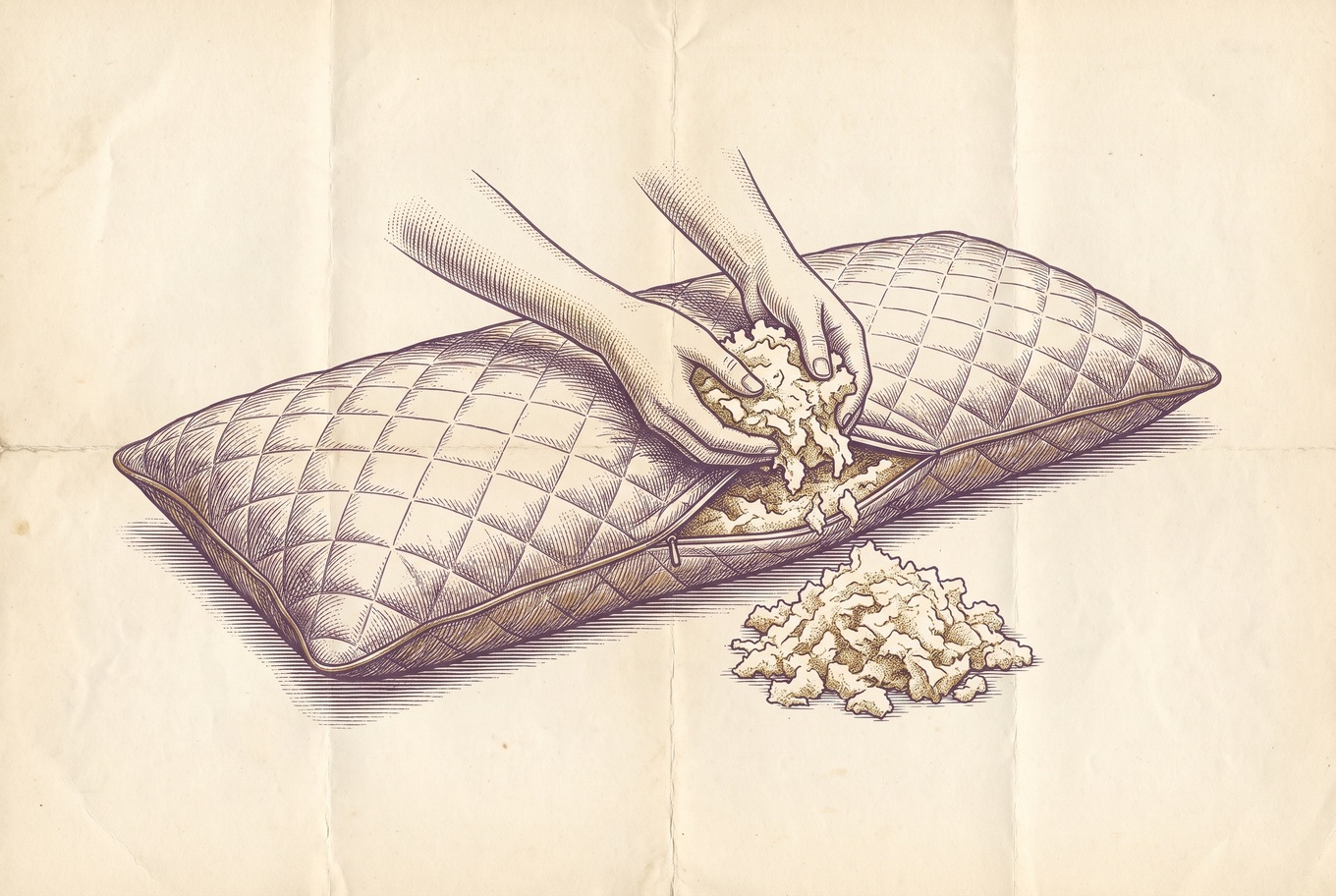
Two habits help during the night. Pull the pillow away from your body for a minute so the surface can lose some heat, then bring it back. If your fill is shredded, take some out in summer so less foam wraps around you. You can put it back when the nights turn cold.
Common questions
Short answers to the questions people ask most about cooling body pillows, each drawn from the sources cited in the sections above.
Can I put a cooling cover on the body pillow I already own?
Yes, if your pillow is the standard body pillow size the cover lists. Many cooling covers, such as the FITTIA and Degrees of Comfort cases, are cut for it. It is the cheapest way to test whether a cool surface helps you.
Why does my cooling pillow feel warm after an hour?
The fabric and fill have soaked up body heat. That heat has nowhere to go. A cooler room, a fan, or turning to the other side resets the surface for a while.
Does gel make a memory foam body pillow cool?
Gel adds some heat-absorbing mass, and you notice it most when you first lie down. None of the gel pillow listings we read said how long the effect lasts.
Is a higher Q-max always better?
A higher number means a colder first touch. It does not measure breathability or how the fabric handles sweat, so a lower-rated cover that breathes may feel better by morning.
Do cooling covers need special washing?
Often, yes. Follow the care instructions on your cover, since some fabrics and fills need gentler handling than others. One seller asks you to use a mesh laundry bag, and some foam pillows are spot clean only.
When should night sweats send me to a doctor?
When they disrupt your sleep, or when they come with other symptoms. Cleveland Clinic advises seeing a provider, because the cause may be something a pillow cannot fix.
Sources
Gathered here, the outside pages this body pillow guide quotes, each beside the part of the guide that needed it.
- Walmart listing (walmart.com), needed in “What makes a body pillow a cooling body pillow?”; “What do cooling body pillow listings claim?”.
- Frontiers in Sleep, 2025 (frontiersin.org), needed in “Does a cooling pillow help you sleep better?”.
- Cleveland Clinic, 2026 (newsroom.clevelandclinic.org), needed in “Key Takeaways”; “How do you keep a cooling body pillow cool?”.
- The Menopause Society (menopause.org), needed in “Key Takeaways”.
- Degrees of Comfort body pillow case (amazon.com), needed in “What makes a body pillow a cooling body pillow?”; “What do cooling body pillow listings claim?”.
- FITTIA cover listing (amazon.com), needed in “What makes a body pillow a cooling body pillow?”; “Is the cover or the fill doing the cooling?”; “What do cooling body pillow listings claim?”.
- ASTM International (astm.org), needed in “How long does a cooling body pillow stay cool?”.
- Nestl (nestl.com), needed in “How long does a cooling body pillow stay cool?”; “How do you keep a cooling body pillow cool?”.
- Costco Essential Comfort pillow (costco.com), needed in “Is the cover or the fill doing the cooling?”; “What do cooling body pillow listings claim?”.
- Comfyt USA (comfytusa.com), needed in “What does a Q-max number on a pillow cover tell you?”.
- Elegear on Amazon (amazon.com), needed in “What does a Q-max number on a pillow cover tell you?”; “How do you keep a cooling body pillow cool?”.
- eBay nylon body pillow cover (ebay.com), needed in “What do cooling body pillow listings claim?”.
- Snuggle-Pedic body pillow (amazon.com), needed in “What do cooling body pillow listings claim?”.
- Mindful Design body pillow (amazon.com), needed in “What do cooling body pillow listings claim?”; “How do you keep a cooling body pillow cool?”.
- HOMELAB body pillow (amazon.com), needed in “What do cooling body pillow listings claim?”.
- eBay shredded foam body pillow (ebay.com), needed in “What do cooling body pillow listings claim?”.
- Okamoto-Mizuno and Mizuno (ncbi.nlm.nih.gov), needed in “Does a cooling pillow help you sleep better?”.
- PLOS One (ncbi.nlm.nih.gov), needed in “Does a cooling pillow help you sleep better?”; “Who gets the most from a cooling body pillow?”.
- NIA (nia.nih.gov), needed in “Who gets the most from a cooling body pillow?”.
- Cleveland Clinic (my.clevelandclinic.org), needed in “Who gets the most from a cooling body pillow?”; “Common questions”.