Is an organic pregnancy pillow worth it, and what makes one non toxic?
Updated .
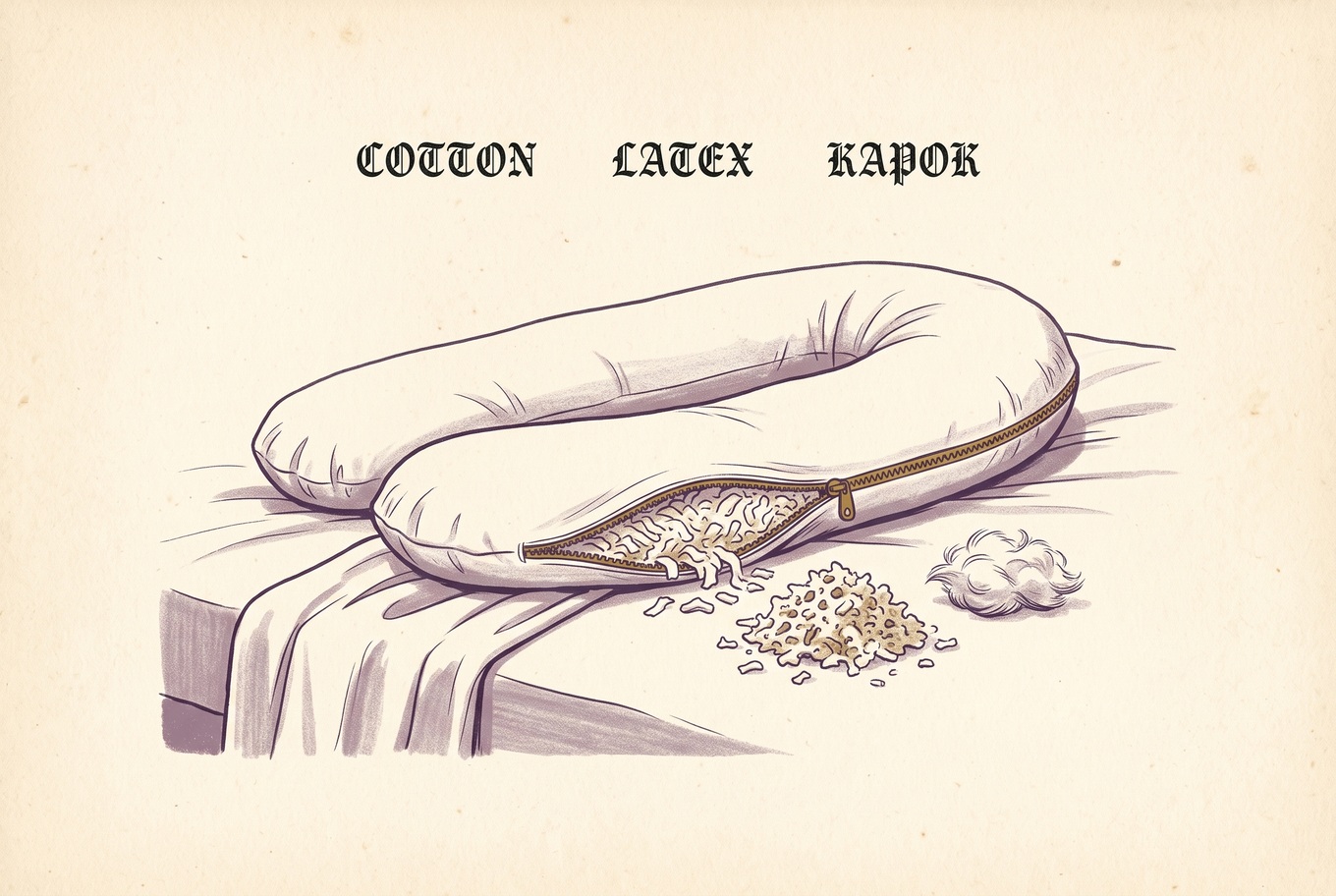
Plenty of pregnancy pillows say organic on the front. Far fewer back that up for the fill, which is the part you lean on every night. This guide shows you how to check the gap before you pay.
Short answer: An organic pregnancy pillow is worth it only when the proof covers the fill as well as the cover. A cotton or wool pillow should carry a GOTS organic label as a finished product, which means at least 95% organic fiber (Global Standard) and a certifier checking each processing stage (GOTS). For latex, ask for a certificate that names the latex itself. OEKO-TEX and CertiPUR-US are safety tests, not organic labels. Of the eight seller pages we read, four showed proof beyond the cover.
This guide is for: people who are pregnant, want a body or wedge pillow whose cotton or wool was grown without synthetic pesticides, and want to check a seller's certificate before paying.
Key Takeaways
- A GOTS "organic" label needs at least 95% organic fiber, and "made with organic materials" needs at least 70%. The label tells you which grade you are buying, so read the exact wording and don't stop at the badge.
- Of the 8 seller pages we read, 4 showed proof beyond the cover and only 1 printed a license number. The rest either left the fill unproven or named no certificate at all. This guide shows you how to close that gap.
- CertiPUR-US holds foam to VOC emissions under 0.5 ppm, but that can't make foam organic. Treat it, and OEKO-TEX, as safety tests that sit beside an organic standard. Neither one replaces it.
On This Page
What makes a pregnancy pillow organic?
In the US, a pillow can be sold as organic when the finished product meets USDA organic rules or the GOTS standard, not just its raw cotton.
Organic status starts on the farm, where cotton and wool are grown. Federal rules mostly stop there. USDA's National Organic Program does not regulate or enforce organic claims on processed fiber and textiles (Organic Trade Association). That gap affects you. A pillow is spun, woven, dyed and sewn long after the cotton leaves the field.
USDA fills the gap by pointing to a private standard. Textiles that meet the Global Organic Textile Standard may be sold as organic in the US (USDA AMS). Unless the finished product is certified to USDA rules, its label may not imply USDA organic status or use the USDA seal. So a GOTS label, not a USDA seal, is the mark you should look for.
GOTS sets two label grades based on how much of the product is organic fiber (Global Standard). It follows the product through processing, so the certificate belongs to the finished pillow or cover. A label that says "made with organic" is a lower grade than one that says "organic," so read the exact words.
Latex isn't a textile, so ask the seller which organic standard covers it and for the certificate. Kapok and other plant fills need their own paperwork too. When a seller prints organic across the top of a page, it may only mean the cover. You'll see that pattern in our count. Once you can spot it, you have done most of the work.
If you haven't settled on a shape yet, our guide to which pregnancy pillow to buy covers that first.
How many organic pregnancy pillows certify the fill?
We read eight seller pages for organic pregnancy and body pillows; four named a certification beyond the cover, and one showed a license number.
We read eight seller pages on October 5, 2026, each for a pillow sold as organic and suggested for pregnancy. We counted what each page's text said about certification. The count covers page text only. The body pillows in our picks were bought and handled, but none was weighed or tested for it.
| Bucket | What the page stated | Pages | Count |
|---|---|---|---|
| A. Proof beyond the cover | A named certification for the fill or the finished pillow | TOM Pure Joy wedge; Comfort's Best wool body pillow; Naturepedic body pillow; The Futon Shop body pillow | Four of eight |
| B. Cover only | A cover certificate over a fill that is tested or uncertified | MINICAMP U-shape; MINICAMP full body; Babymoov B.Love | Three of eight |
| C. No certification named | Organic in the name, no certification in the text we could read | Savvy Rest body pillows | One of eight |
Only one page printed a certifier and a license number. You need both to check a claim yourself. The Futon Shop shows a GOTS "organic" badge, names IDFL as the certifier and gives the license number beside it (The Futon Shop). The other three in bucket A named a standard and stopped there.
Read bucket B slowly. Each certificate reaches the cover, but no organic standard reaches the fill. The MINICAMP U-shaped page offers a kapok and latex blend or PES polyester fill inside an OEKO-TEX cotton insert (MINICAMP). You get an organic cover around a fill that was tested, or not certified at all.
Which certifications should an organic pregnancy pillow carry?
GOTS on the finished pillow proves organic content. OEKO-TEX and CertiPUR-US only test for harmful substances, and latex needs its own paperwork.
| Label | What it covers | Proves organic? | The figure it sets | Source |
|---|---|---|---|---|
| GOTS | Finished textile products made with organic cotton or wool | Yes | 95% organic fiber for "organic"; 70% for "made with organic materials" | Global Standard |
| OEKO-TEX Standard 100 | Every thread, button and accessory of a textile | No | Tested against more than 1,000 harmful substances | OEKO-TEX |
| CertiPUR-US | Polyurethane foam only | No | VOC emissions under 0.5 ppm | TechRadar |
The table splits in two. GOTS is an organic standard, while OEKO-TEX and CertiPUR-US are safety tests. Both kinds help you. Only the first supports the word organic on a label.
Latex needs its own paperwork. A GOTS label on the cotton cover says nothing about the rubber inside, and CertiPUR-US never applies to it. If your pillow is latex, ask the seller which organic standard certifies the latex itself, and who checked it. A clear answer keeps you from paying organic prices for a core nobody has vouched for.
OEKO-TEX sorts products into 4 classes. Product class 1, for babies and children up to 3 years, has the strictest requirements and limit values (OEKO-TEX). If the pillow will stay near a newborn, ask which class its certificate covers.
CertiPUR-US uses a small chamber test standardized by ISO to verify low emissions (TechRadar). It only applies to polyurethane foam. It never certifies a latex, kapok or wool fill. You need a different label for those.
Should you check the cover or the fill of a pregnancy pillow?
The fill is most of the pillow by weight, so a certified cover wrapped around an uncertified fill answers only half the organic question.
Think about what you hold all night. The cover is a thin layer of woven cotton. The fill is nearly everything else, and it sits against you for months. So a GOTS label that reaches only the cover tells you about the smallest part of the pillow.
That's how a true headline can still mislead you. The MINICAMP long body pillow offers two fills, OEKO-TEX polyester fiber or natural kapok (MINICAMP). The MINICAMP U-shaped pillow offers a kapok and latex blend or PES polyester (MINICAMP). Both pages put their GOTS claim on the cover. Neither names an organic standard for the fill.
There is a fair case for that split. You wash the cover often. A removable organic cover over a tested fill may suit a tight budget. Just price it as an organic cover, not as an organic pillow.
Before you buy, ask the seller three things:
- Does the pillow's certificate reach the fill, and which standard is it?
- Does the certificate cover the material or the finished pillow?
- Can they give you the certifier and the license number?
Vague answers are an answer too. If you're weighing a smaller pillow instead, our page on whether a pregnancy wedge pillow is enough compares the shapes side by side.
Does non toxic mean the same thing as organic?
Non toxic is a seller's word, not a certification, so look for the named test standard behind it, such as OEKO-TEX or CertiPUR-US.
No, and the difference changes what you should look for. Organic describes how a fiber was grown and processed, while non toxic describes what a product is said to leave out. A pillow can be one without being the other. A polyester fill can pass a harmful-substance test and still be wholly synthetic.
So when you see non toxic, look for the test behind it. OEKO-TEX says every item with its STANDARD 100 label has passed safety tests for harmful substances (OEKO-TEX). That means the levels stay under set limits, not that every chemical is absent. You're buying a ceiling, not a zero.
Latex sits between the two ideas. Ask for its organic certificate and for any emissions test the seller holds, since one does not stand in for the other. For foam, CertiPUR-US is a non toxic test and nothing more.
Clean, pure, natural and eco carry no test at all. You have no way to check them. Accept non toxic only when it comes with a named standard you can look up. If a seller can't name one, that tells you something useful about the listing.
Smell tells you little either way. A new latex pillow can smell of rubber while a synthetic one smells of nothing. Neither smell tells you what a certificate would.
Are flame retardants in pregnancy pillows a real concern?
The CPSC has advised people who are pregnant to ask retailers for assurance that products contain no organohalogen flame retardants.
They're worth asking about. Most flame-retardant rules don't reach bed pillows, so the question falls to you. The CPSC recommends that consumers, especially those who are pregnant or have young children, ask retailers for assurance that products contain no organohalogen flame retardants (Federal Register). The guidance names children's products, home upholstered furniture, mattresses and mattress pads, and electronics casings.
The concern comes from long-running research. In California's CHAMACOS cohort, both prenatal and childhood exposure to PBDE flame retardants was linked to poorer attention, fine motor coordination and cognition in school-age children (Eskenazi et al., EHP). That's why the question is worth your time.
State law covers some products and not others. California's AB 2998 bans covered flame retardants above 1,000 ppm in mattresses, upholstered furniture and children's products, and its list of juvenile products includes nursing pillows (Verdant Law). California's furniture flammability standard does not cover bed pillows (CourtDocket). A pregnancy pillow sold for adults can fall outside both rules.
So ask the seller directly. You want the answer in writing. One organic wedge listing says it has no flame retardants and no petroleum-based fabric or fill (The Organic Mattress). A written statement like that gives you something to hold the seller to.
Which fill should you choose for an organic pregnancy pillow?
Choose the fill by feel first and proof second. Then ask for a certificate that names the fill itself, not just the cotton cover.
| Fill | How it feels | Organic proof to look for | Our judgement |
|---|---|---|---|
| Shredded latex | Springy, holds its height | An organic certificate naming the latex | Clearest paper trail on the pages we read |
| Solid latex | Firm, single piece | An organic certificate naming the latex | Suits a wedge; you can't adjust it |
| Organic wool | Dense and warm | An organic textile label on the finished pillow | Ask about washing before you buy |
| Kapok | Light and soft | An organic farming certificate, or at least a substance test | Ask for the document, since claims varied most here |
| Polyester fiber or microbeads | Soft and even | None available | Not organic, whatever the cover says |
Start with feel. You'll sleep on this for months. Latex pushes back, wool cushions, and kapok feels the lightest of the three. If your hips ache, a fill that keeps its height between your knees may matter more to you than softness.
Adjustable fills help as your body changes. With a zippered pillow, you can add or remove shredded material as the weeks pass. Savvy Rest sells body pillows in kapok, wool, wool-latex and shredded latex, each in an organic cotton casing (Savvy Rest).
Care is the part people forget. The Naturepedic latex body pillow is spot clean only, and its washable organic cotton case is sold as an add-on (Naturepedic). If you expect leaks or spills after the birth, budget for a second washable case.
Timing affects the choice too. Our guide on when to start using a pregnancy pillow helps you work out how many months of use to plan for.
How much does an organic pregnancy pillow cost?
On the seller pages we read, prices ran from $75 for a small wedge to more than $600 for the largest organic wool body pillow.
| Pillow, as listed | Shape | Fill named on the page | Price shown |
|---|---|---|---|
| TOM Pure Joy | Wedge | Organic latex or kapok | $75 |
| Naturepedic | Long body | Organic latex | $219 |
| Savvy Rest kapok | Body, three sizes | Kapok | $249 to $419 |
| Savvy Rest wool | Body, three sizes | Wool | $429 to $618 |
A full body pillow with proof that reaches the fill costs far more than a small wedge, and the table shows the gap. The cheapest pillow on the list is the wedge, with organic latex or kapok inside. Full latex or wool body pillows cost several times as much.
You don't need the most expensive option to get real proof. A small wedge with organic latex puts proven material right where your belly rests, at a fraction of the price of a full pillow. For many people, that's a better use of a limited budget, at least early on.
These are the prices each page showed on the day we read it. Prices change, so check again. Spare covers and shipping add to the total. Compare the price of the fill you can prove, not the size of the organic badge.
Common questions
Is an organic cotton cover enough to call a pregnancy pillow organic?
Not on its own. An organic cotton cover proves only the cover. Ask whether the pillow's certificate reaches the fill, and whether it covers the finished pillow. If it reaches only the cover, you're buying an organic-covered pillow.
Does OEKO-TEX mean a pillow is organic?
No. OEKO-TEX Standard 100 tests a finished product for harmful substances. It says nothing about how the fiber was grown. A polyester fill can pass. Treat it as a safety test that sits beside an organic standard.
Is a latex pregnancy pillow a problem if you have a latex allergy?
It can be. Organic latex is still natural rubber latex, and certification doesn't change what it is made from. If you have a known latex allergy, ask your doctor first and look at wool or kapok fills.
Is memory foam ever non toxic enough for a pregnancy pillow?
It can pass a test, but it can't be organic. Look for CertiPUR-US on the foam, which screens for certain flame retardants and limits emissions. Then decide whether a tested synthetic fill is what you meant by organic.
How do you check a seller's organic certificate?
Ask for the certifier's name and the license number, then confirm them with the certifier. Only one of the eight pages we read printed both. A seller who stands behind the claim should send them without fuss.
Can you keep using an organic pregnancy pillow for nursing?
Many people do. Some pillows are sold as two-in-one designs. If your baby will lie against it, ask which OEKO-TEX product class covers the materials. Class 1 is the one for babies. Don't let a baby sleep on it.
Sources
Gathered here, the outside pages this body pillow guide quotes, each beside the part of the guide that needed it.
- Global Standard (global-standards.org), needed in “What makes a pregnancy pillow organic?”; “Which certifications should an organic pregnancy pillow carry?”.
- GOTS (global-standards.org), needed in the opening.
- Organic Trade Association (ota.com), needed in “What makes a pregnancy pillow organic?”.
- USDA AMS (ams.usda.gov), needed in “What makes a pregnancy pillow organic?”.
- TOM Pure Joy wedge (theorganicmattress.com), needed in “How many organic pregnancy pillows certify the fill?”; “Are flame retardants in pregnancy pillows a real concern?”; “How much does an organic pregnancy pillow cost?”.
- Comfort's Best wool body pillow (comfortsbest.com), needed in “How many organic pregnancy pillows certify the fill?”.
- Naturepedic body pillow (naturepedic.com), needed in “How many organic pregnancy pillows certify the fill?”; “Which fill should you choose for an organic pregnancy pillow?”; “How much does an organic pregnancy pillow cost?”.
- The Futon Shop body pillow (thefutonshop.com), needed in “How many organic pregnancy pillows certify the fill?”.
- MINICAMP U-shape (minicampshop.com), needed in “How many organic pregnancy pillows certify the fill?”; “Should you check the cover or the fill of a pregnancy pillow?”.
- MINICAMP full body (minicampshop.com), needed in “How many organic pregnancy pillows certify the fill?”; “Should you check the cover or the fill of a pregnancy pillow?”.
- Babymoov B.Love (kidobebe.com), needed in “How many organic pregnancy pillows certify the fill?”.
- Savvy Rest body pillows (savvyrest.com), needed in “How many organic pregnancy pillows certify the fill?”; “Which fill should you choose for an organic pregnancy pillow?”; “How much does an organic pregnancy pillow cost?”.
- OEKO-TEX (oeko-tex.com), needed in “Which certifications should an organic pregnancy pillow carry?”; “Does non toxic mean the same thing as organic?”.
- TechRadar (techradar.com), needed in “Which certifications should an organic pregnancy pillow carry?”.
- Federal Register (federalregister.gov), needed in “Are flame retardants in pregnancy pillows a real concern?”.
- Eskenazi et al., EHP (ncbi.nlm.nih.gov), needed in “Are flame retardants in pregnancy pillows a real concern?”.
- Verdant Law (verdantlaw.com), needed in “Are flame retardants in pregnancy pillows a real concern?”.
- CourtDocket (courtdocket.org), needed in “Are flame retardants in pregnancy pillows a real concern?”.