Should you buy a weighted body pillow or a memory foam one?
Updated .
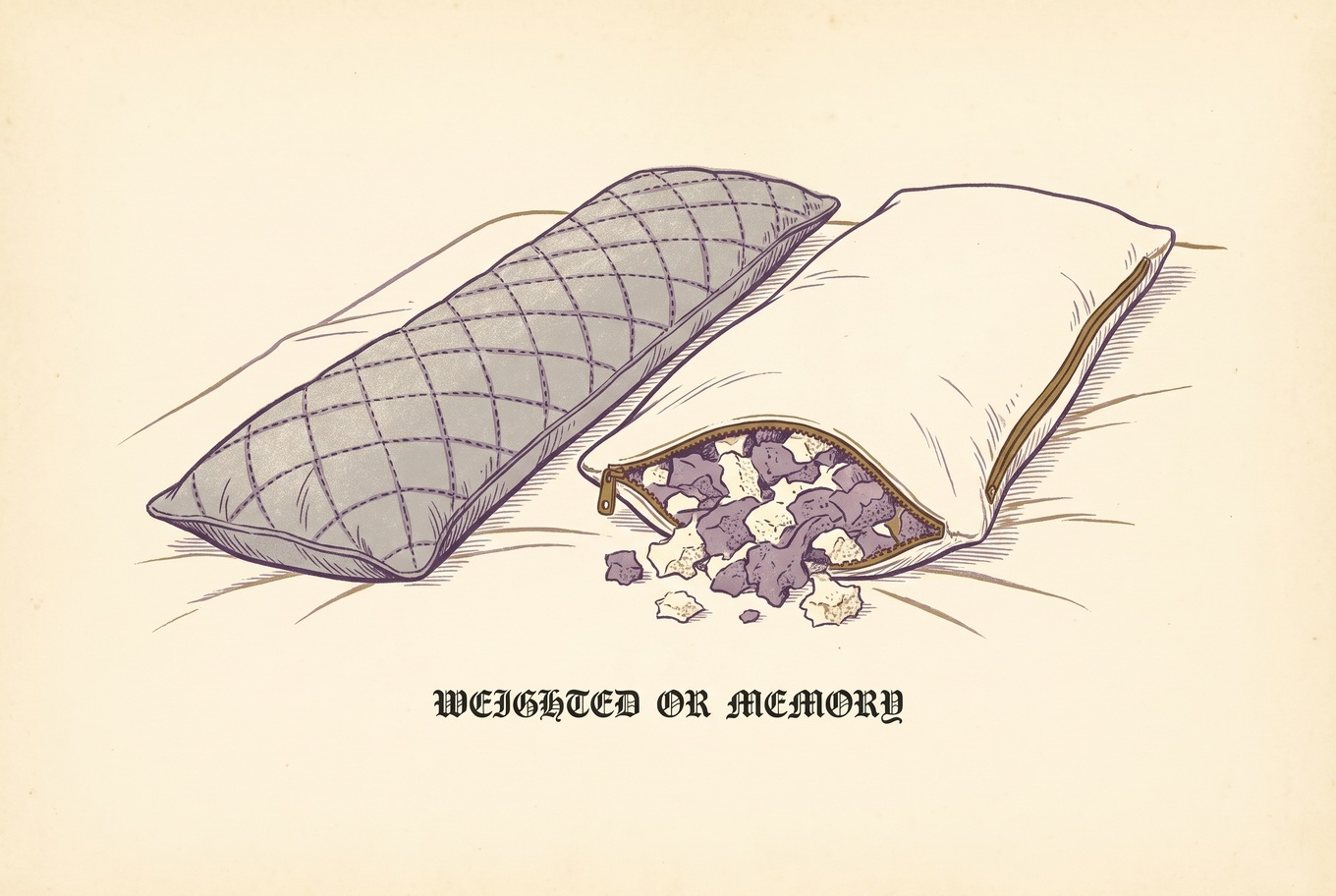
On a product page, a weighted body pillow and a memory foam body pillow look much the same. They do different jobs. One gives you pressure to hug, and the other holds your legs and arms in place. This page puts the research, the sellers' specifications and our own count side by side. Then you can choose.
Short answer: Buy a weighted body pillow if you like firm pressure to hug, and know that the evidence behind it comes from blanket trials, not pillow trials. Buy a memory foam body pillow if you want a long support that keeps your knees apart and your arm up. For most side sleepers, foam does the positioning and weight only adds heft. The full-length weighted pillows we read weigh between 6.5 lb (Zonli product page) and 10.8 lb (Shloof product page).
This guide is for: people in the United States choosing between a weighted body pillow and a memory foam body pillow for side sleeping, hugging, or restless nights.
Key Takeaways
- No trial we found has tested a weighted body pillow. The strongest evidence is a trial of one hundred twenty patients given a heavy or a light chain blanket for four weeks (Journal of Clinical Sleep Medicine, PMC). The heavy blanket weighed 8 kg and the light one 1.5 kg (JCSM commentary, PMC), which is about 3.3 pounds (ScienceDaily, 2020). A hugged pillow weighs far less.
- We read 5 seller pages on 2026-09-26. Two named glass beads as the source of weight, one named flaxseed, and two named no material. One of the five also put foam inside, so "weighted" and "memory foam" are not always separate choices.
- A memory foam body pillow is longer and wider than the weighted ones we read. One shredded foam body pillow is sold at 20 by 54 inches (Coop product page). The largest weighted size we read was 48 x 14 inches (Zonli product page). Choose on shape, not weight.
On This Page
What is a weighted body pillow, and how is it different from a memory foam one?
A weighted body pillow adds glass beads or seeds for heft on purpose. A memory foam one uses foam to shape around you instead.
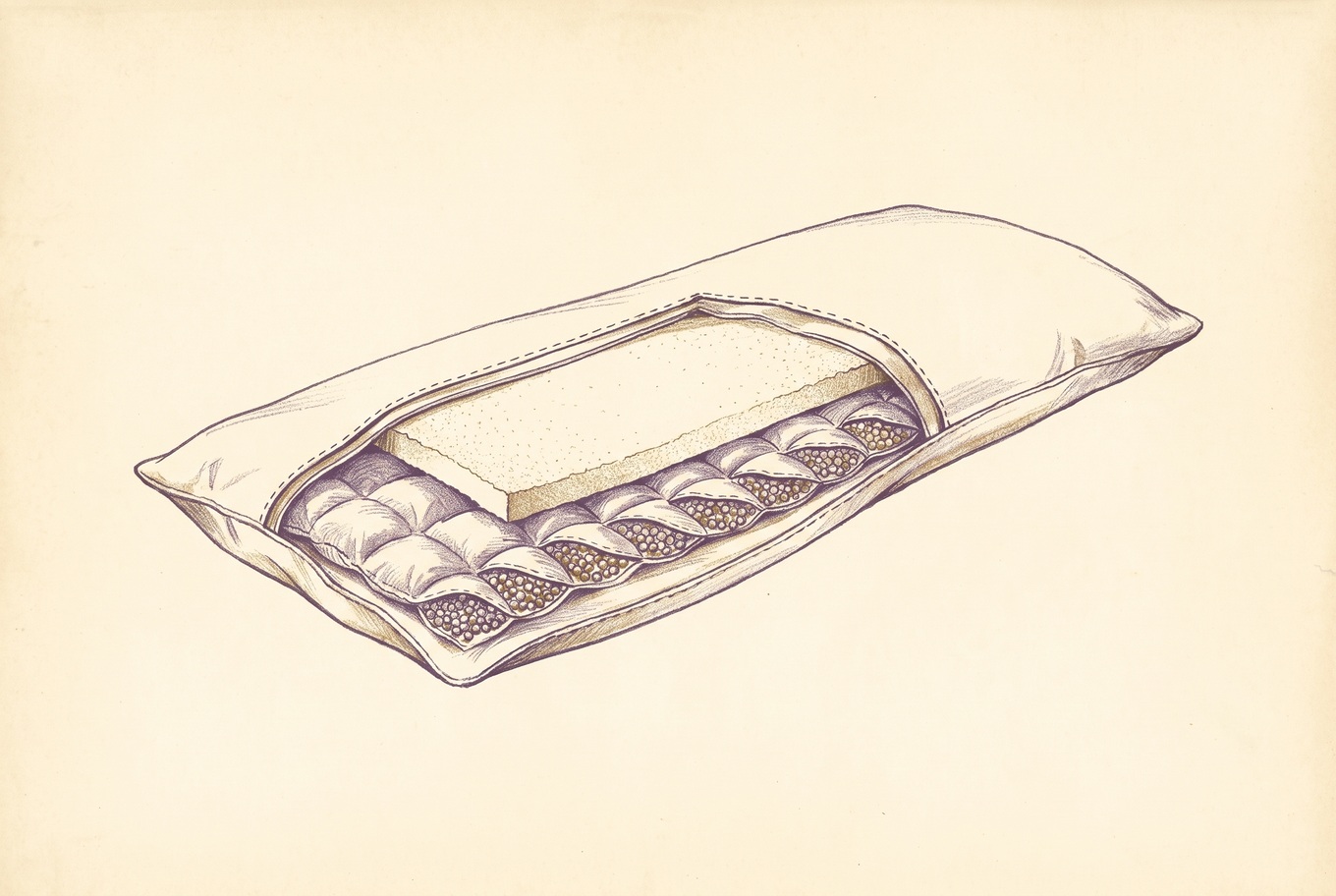
A weighted body pillow is a long pillow with a heavy layer sewn inside. Most of the pages we read that name a material say glass beads. They sit in quilted pockets. Foam or polyester padding usually hides single beads. A memory foam body pillow is a long case filled with foam, either one solid piece or shredded bits you can add or take out (Coop product page). If the category is new to you, our page on what a body pillow is covers the basic shapes.
You feel the difference in where the weight sits. A weighted pillow packs its heft into a narrow tube. That weight presses along your side. Some people find that pressure calming when they hug it. A foam pillow spreads its fill through a longer, wider case, so the bulk holds your top knee and arm up instead of pressing on you. Ask yourself one thing before you buy. Do you want to be held down, or held in place?
| Feature | Weighted body pillow | Memory foam body pillow |
|---|---|---|
| Size on seller pages | 41 x 10 in to 48 x 14 in (Zonli) | 20 x 54 in (Coop) |
| Stated weight | 6.5 to 10.8 lb (Zonli, Shloof) | Not in the text we read |
| What the weight does | Presses along your side | Keeps its shape between your knees |
| Can you change the fill? | Rarely, since beads sit in sewn pockets | Often, with shredded fill |
| Our judgement | Buy it for pressure you like to hug | Buy it for positioning |
Does the research on weighted bedding apply to a body pillow?
The trials tested weighted blankets, not pillows. They found better sleep scores in some groups, so treat any pillow claim as borrowed.
We found no trial of a weighted body pillow. The studies sellers point to tested weighted blankets, which lie on top of you and cover most of your body. The table below lists the two trials cited most often.
In the Swedish trial, the researchers called weighted chain blankets a safe and effective treatment for insomnia in patients with psychiatric diagnoses (ScienceDaily). Daytime sleepiness eased too. The Chinese pilot had a mixed result. Sleep quality scores improved more with weighted blankets, but the blankets had no significant effect on insomnia severity scores (BMC Psychiatry).
Take these results as a reason to try weight, not as a promise that it works. A body pillow puts a few pounds against your chest and legs. A blanket spreads far more over you. The dose is different, and so is the contact area. You will know within a couple of weeks whether the pressure calms you or just gets in the way.
| Study | What was tested | Result | What it tells you about a pillow (our judgement) |
|---|---|---|---|
| Ekholm and others, Sweden | One hundred twenty patients, 8 kg vs 1.5 kg blanket (PMC), the light one about 3.3 pounds (ScienceDaily) | Less severe insomnia with the heavy blanket | Supports trying weight, but at a dose no pillow reaches |
| Yu and others, China | 102 adults, weighted vs normal blanket, 1 month (BMC Psychiatry) | Sleep quality score fell 4.1 vs 2.0 points | A modest effect, measured on blankets only |
How heavy should a weighted body pillow be?
The full-length weighted body pillows we read weigh about 6 to 11 pounds. Pick one you can lift and turn over while half asleep.
No medical body sets a weight for a body pillow. The common online rule is about a tenth of your body weight. It comes from blankets. In one sleep lab study, patients took home weighted blankets sized to that rule (Psychiatry and Clinical Psychopharmacology).
Pillow sellers aim lower. That makes the pillow easier to live with. One seller offers its full-length pillow at 6.5 or 8.5 lbs (Zonli product page). You get pressure you can feel without a pillow that pins you down.
By our arithmetic, that is well under the blanket rule. A 150-pound adult following the rule would need a 15-pound blanket, nearly twice the heavier of those two sizes. We think the lower figure makes sense. You hold a body pillow against you rather than lie under it. You also have to move it every time you roll over, and a lighter pillow lets you turn without waking fully.
A lift test works better than a percentage. You should be able to lift the pillow with one arm and swing it to the other side of the bed without sitting up. If you cannot, it is too heavy for night use. Size charts do not change that. If you are between two sizes, the lighter one is the safer choice for a first try.
What do sellers' pages say is inside a weighted body pillow?
Of five seller pages we read, two name glass beads as the weight, one names flaxseed, and two do not name any material for the weight.
We read five seller product pages for weighted body pillows on 2026-09-26 and counted what each one says about the material that supplies the weight. We did not handle, weigh or open any pillow. The pages sort into three buckets:
- Glass beads named: 2 of 5. SleepCloud and Quiet Mind.
- A plant fill named: 1 of 5. Omni-Spring names flaxseed.
- No material named: 2 of 5. Shloof mentions weighted beads but not what they are made of, and the Zonli page text we read names no fill at all.
One of the five, Quiet Mind, also adds foam. So you may not have to choose between weight and cushioning. The table links each page we read.
| Page | Stated weight | Stated size | Weight material | Our note |
|---|---|---|---|---|
| SleepCloud | 6.5 lb | 41 x 10 in | Glass beads | Narrow for between the knees |
| Zonli | 6.5 or 8.5 lb | 41 x 10 or 48 x 14 in | Not named in the text we read | Two sizes on one page |
| Quiet Mind | 8 lb | Not in the text we read | Glass beads plus foam | Size missing |
| Omni-Spring | 4 lb | Not confirmed | Flaxseed | Cover does not come off |
| Shloof | 10.8 lb | Not in the text we read | Unnamed beads | Material not stated |
Does a memory foam body pillow sleep hot?
Memory foam softens as your body warms it, and many people find it holds heat. Shredded fill and a breathable cover let more air through.
Memory foam is made to soften as it warms, which is how it molds to your shape. The same trait means a solid block can hold your body heat close to you through the night. If you run warm, that is the trade you make for the hug of solid foam.
Shredded fill helps a little. Air can move between the pieces. Coop says the shredded fill in its bed pillow is more breathable than dense memory foam, since air can circulate between the pieces (Coop Sleep Goods product page). That comes from the seller, and it describes a bed pillow. If you already sleep warm, choose shredded fill with a thin, breathable cover. You keep the shaping of foam with less trapped heat.
Weighted pillows can run warm too. Glass beads do not trap air the way foam does. The padding around them can, though. A bead pillow wrapped in thick foam or polyester may feel as warm as solid foam against your side.
Labels on foam pillows are worth reading closely. CertiPUR-US certification covers the foam only. It tells you nothing about the cover, the glass beads or the flaxseed. Coop lists CertiPUR-US and Greenguard Gold on its foam body pillow (Coop product page). Ask the seller about the other parts if they matter to you.
Which fill suits side sleeping and hip or back pain?
For side sleepers, the job is keeping the top knee level with the hip. A firm, full-length pillow does that better than a heavy short one.
When you lie on your side, your top leg tends to drop toward the mattress. The Sleep Foundation explains that without support, your top leg may fall forward and twist your lower back (Sleep Foundation). A pillow between your knees keeps your hips stacked, so your lower back stays straighter through the night.
That job needs height between your knees, not heft. In our judgement, a firm, full-length foam pillow does the positioning better than a narrow weighted one. A long pillow reaches from your chin to your ankles. A slim weighted tube may not keep your knees far enough apart. Weight does help in one way. A heavy pillow stays where you put it, so it is still between your knees in the middle of the night.
If you want both, look at models that combine a bead layer with shredded foam. Our guide to a body pillow for side sleepers covers shapes. The wider guide on which body pillow is right for how you sleep covers back and stomach sleeping. See a clinician about pain that lasts. A pillow is not a treatment.
Who should not use a weighted body pillow?
Never put a weighted pillow in a crib or near a sleeping baby. Adults who cannot easily push it away should ask a clinician first.
Babies should not sleep with any weighted product. The American Academy of Pediatrics tells families not to use weighted swaddles or weighted objects inside the swaddle (HealthyChildren.org). A weighted body pillow in a bed you share with a baby carries the same risk.
Children are harder to advise. The trials above tested adults, so we have no pillow weight to suggest for a child. If a child uses one, keep it light enough that they can push it off without help.
The same rule applies to adults. If you cannot move the pillow off your chest easily, do not sleep with it. That matters most for people with breathing problems or limited strength, and for anyone taking medicine that makes them sleep heavily. If any of those apply to you, ask your doctor first.
Pregnancy often prompts a body pillow purchase. What you need then is shape more than weight, so a foam pillow you can bend around your belly and back suits the job better, in our judgement.
How do you wash and care for each type?
Beads and foam rarely go in the washer, so the cover does the work. Check whether the cover unzips before you buy either type of pillow.
Neither type of core washes easily. Glass beads get heavy when wet. A soaked bead layer can take a long time to dry. The cover is the part you will wash. Before you buy, look on the product page for the word "removable," because it saves you a lot of spot cleaning later.
Two of the weighted pages we read describe a washable cover. SleepCloud lists a removable, washable cover (SleepCloud product page), and Quiet Mind says its cover unzips and goes right in the washer (Quiet Mind product page). Omni-Spring's pillow has no removable cover, so you can only spot clean it. Foam body pillows work the same way. Coop describes a machine washable and removable cover over its foam fill (Coop Sleep Goods product page).
A few habits keep either type in good shape:
- Shake shredded foam now and then so it does not clump at one end.
- Check the seams of a bead pillow often. A split pocket leaks beads fast.
- Use a zip cover over any cover that cannot come off.
Common questions
Is a weighted body pillow the same as a weighted blanket?
No. A blanket lies over your whole body, and a body pillow sits against one side. The sleep trials people quote tested blankets, so their results are only a rough guide for a pillow.
Can one pillow be both weighted and memory foam?
Yes. One of the five seller pages we read, Quiet Mind, pairs glass beads with foam. You get pressure from the beads and some shaping from the foam, though a bead layer is not something you can adjust.
Will a weighted body pillow help with anxiety?
Maybe. In the Swedish blanket trial, participants reported reduced symptoms of fatigue, depression and anxiety (ScienceDaily). No pillow has been tested the same way.
Is a heavier weighted body pillow better?
Not by default. A heavier pillow presses harder but is harder to move when you roll over. Start light, and only size up if the pressure still feels like too little after a week or two.
Does CertiPUR-US cover the glass beads?
No. CertiPUR-US tests flexible polyurethane foam only. It says nothing about glass beads, flaxseed or the fabric cover, so ask the seller about those parts separately.
Can a child use a weighted body pillow?
Babies never should. For older children, no trial gives a safe pillow weight. Keep any pillow light enough that the child can lift it off on their own, and check with their doctor first.
Sources
Gathered here, the outside pages this body pillow guide quotes, each beside the part of the guide that needed it.
- Zonli product page (zonlihome.com), needed in “Key Takeaways”; “What is a weighted body pillow, and how is it different from a memory foam one?”; “How heavy should a weighted body pillow be?”; “What do sellers' pages say is inside a weighted body pillow?”.
- Shloof product page (shloofpillow.com), needed in “What is a weighted body pillow, and how is it different from a memory foam one?”; “What do sellers' pages say is inside a weighted body pillow?”.
- Journal of Clinical Sleep Medicine, PMC (pmc.ncbi.nlm.nih.gov), needed in “Key Takeaways”.
- JCSM commentary, PMC (pmc.ncbi.nlm.nih.gov), needed in “Key Takeaways”; “Does the research on weighted bedding apply to a body pillow?”.
- ScienceDaily, 2020 (sciencedaily.com), needed in “Key Takeaways”; “Does the research on weighted bedding apply to a body pillow?”; “Common questions”.
- Coop product page (coopsleepgoods.com), needed in “Key Takeaways”; “What is a weighted body pillow, and how is it different from a memory foam one?”; “Does a memory foam body pillow sleep hot?”; “How do you wash and care for each type?”.
- BMC Psychiatry (bmcpsychiatry.biomedcentral.com), needed in “Does the research on weighted bedding apply to a body pillow?”.
- Psychiatry and Clinical Psychopharmacology (pmc.ncbi.nlm.nih.gov), needed in “How heavy should a weighted body pillow be?”.
- SleepCloud (amazon.com), needed in “What do sellers' pages say is inside a weighted body pillow?”; “How do you wash and care for each type?”.
- Quiet Mind (onequietmind.com), needed in “What do sellers' pages say is inside a weighted body pillow?”; “How do you wash and care for each type?”.
- Omni-Spring (omni-spring.com), needed in “What do sellers' pages say is inside a weighted body pillow?”.
- Coop Sleep Goods product page (coopsleepgoods.com), needed in “Does a memory foam body pillow sleep hot?”.
- Sleep Foundation (sleepfoundation.org), needed in “Which fill suits side sleeping and hip or back pain?”.
- HealthyChildren.org (healthychildren.org), needed in “Who should not use a weighted body pillow?”.