Does a body pillow help with back pain?
Updated .
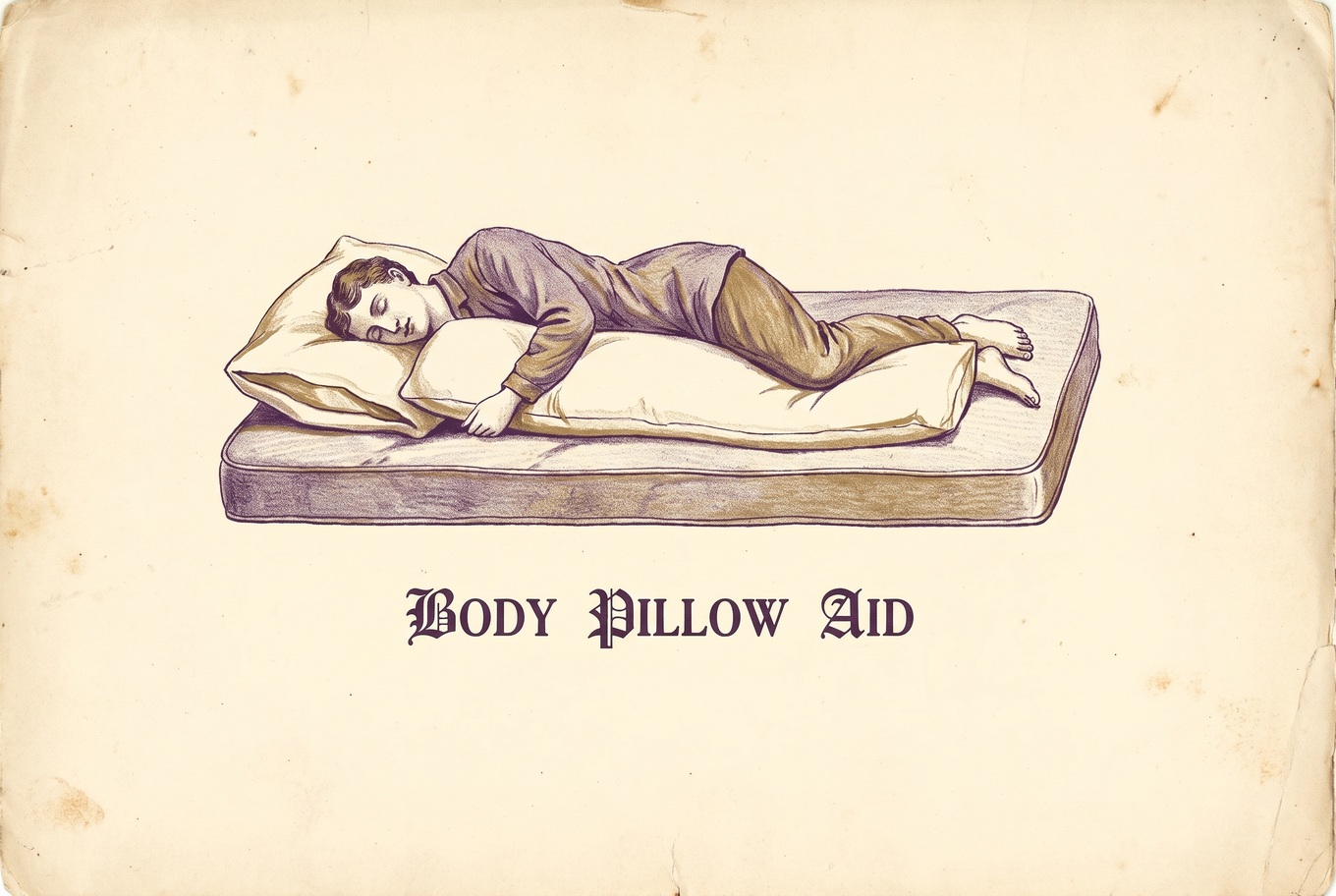
Back pain is common enough to feel ordinary. In 2019, 39.0% of adults had back pain in the past 3 months, according to the CDC's National Center for Health Statistics. For many people the worst of it shows up in bed or first thing in the morning. A body pillow is one of the simplest changes you can make to how you lie at night. This page covers what it can do, where it goes, and what to check before you buy.
Short answer: Often, yes, if you sleep on your side. A body pillow between your knees and ankles stops your top leg from dropping and twisting your lower back. That is the setup Mayo Clinic suggests for side sleepers with back pain. Adults spend about 54% of their time in bed on their side (Skarpsno and colleagues). So most people with a sore back have a use for one. It helps you hold a better position. It does not treat the cause.
This guide is for: people with lower back pain who sleep on their side or back and want to know whether a long pillow is worth adding to the bed.
Key Takeaways
- 54% of time in bed goes to side sleeping, on average, in a motion-sensor study of adults (Skarpsno and colleagues). That is the position where a body pillow between the knees does most of its work.
- 3 placements, one for each sleeping position. Side sleepers put it between the knees and ankles, back sleepers under the knees, and front sleepers under the hips, following Mayo Clinic and NHS advice.
- 2 of 6 seller pages we read for standard body pillows said how much fill was inside by weight. Ask the seller for the fill weight before you buy.
On This Page
Does a body pillow help back pain at all?
It can help by keeping your hips and knees in line, but the research is about sleep position and pillow placement, not the pillow.
We found no trial that tested a body pillow, as a product, against back pain. What does exist is research on sleep position and clinical advice on where pillows go. The two point the same way. A scoping review found that side lying was generally protective against spinal symptoms (Cary and colleagues, BMJ Open). A later review of six studies found that the supine position is associated with lower LBP prevalence, while prone sleeping increases LBP risk (Saini and colleagues, Musculoskeletal Care). In plain terms, back sleepers reported less low back pain. Stomach sleepers reported more.
These studies are small. In one that tracked postures at home, there were no significant differences between the Control and Lumbar groups in time spent in provocative postures (Cary and colleagues, PLOS ONE correction). Position matters, but it is one factor among several.
The clinical advice is clearer. Mayo Clinic tells side sleepers with back pain to draw your legs up slightly toward your chest and put a pillow between your legs (Mayo Clinic). It adds that you can use a full-length body pillow if you prefer.
So the fair claim is modest. A body pillow makes a recommended position easier to hold all night. It will not heal a strained muscle, a disc problem or arthritis. You should expect comfort, not a cure.
Why does side sleeping pull on the lower back?
When your top knee drops toward the mattress, your pelvis rolls forward and twists the lower spine for several hours each night.
Most adults sleep on their side. In a study that fitted adults with motion sensors at home, more than half of the TIB is spent in the side position, about a third in the back position and less than 10% in the front position (Skarpsno and colleagues, Nature and Science of Sleep). TIB means time in bed. The same study found that BMI and age are positively associated with time in the side position.
The trouble is your top leg. On your side, your top knee falls forward and down unless something holds it up. Without support, your top leg may fall forward and twist your lower back (Sleep Foundation). That subtly pulls the spine out of alignment. A physical therapy practice advises a support pillow or body pillow between the knees and ankles (Ivy Rehab). That way the top leg does not pull the hips forward and rotate the lower back.
A regular pillow can do this. In our judgement, though, it tends to slip out when you turn over. A body pillow is long enough to hug, so the end under your arm holds the middle in place between your knees.
The same practice adds that a body pillow can add support if the top shoulder or hip rolls forward. That matters if you wake with your upper back twisted as well.
Where should the body pillow go for each sleeping position?
On your side it goes between the knees and ankles, on your back it goes under the knees, and on your front it goes under the hips.
Placement depends on position. Use this table as a starting point and adjust for comfort.
| How you sleep | Where the body pillow goes | What it is meant to do |
|---|---|---|
| On your side | Between the knees, down to the ankles, top end under your arm | Keeps the top leg level so the pelvis does not roll |
| On your back | Folded under the knees and the backs of the thighs | Bends the knees and eases the pull on the lower back |
| On your front | Under the lower stomach and hips | Reduces the arch in the lower back |
| Rolling at night | Behind your back, to lean into | Slows a full roll onto your back or front |
For back sleepers, Mayo Clinic suggests a pillow under your knees. This may help relax your back muscles and keep the curve of your lower back (Mayo Clinic). An NHS trust bases the choice on what makes your pain worse. If walking and standing do, it suggests lying on your least painful side with pillows between your knees. If sitting and bending do, front sleepers can place one or two pillows beneath the lower stomach and hips (East Lancashire Hospitals NHS Trust).
An Allina Health handout adds that a pillow behind the back, to lean into, can help support it (Allina Health). If you roll onto your back and wake sore, move the body pillow behind you. Our guide to what body pillow works for side sleepers covers the side position in more detail.
Is a body pillow better than a knee pillow for back pain?
Neither is better for everyone; a body pillow covers knees to ankles and blocks rolling, while a knee pillow is smaller and easier to move.
Each option solves the same problem with a different amount of pillow. The table below is our judgement from the shape of each option. No maker publishes this comparison, and we did not test any product.
| Setup | Stays put when you turn | Supports | Slows a roll onto back or front | Bed space | Our judgement |
|---|---|---|---|---|---|
| Bed pillow between knees | Often slips out | Knees only | No | Small | Try this first; you already own one |
| Contoured knee pillow | Better; shaped to the legs | Knees only | No | Small | Suits a small or shared bed |
| Straight body pillow | Yes, if you hug it | Knees and ankles | Partly, placed behind you | Large | Strong fit if your top shoulder also rolls |
| U- or C-shaped pillow | Yes, it surrounds you | Knees, ankles and back | Yes | Very large | Useful in pregnancy; crowds a shared bed |
Start with a pillow you already own. If it keeps slipping out by morning, that is the case for a longer one. The same goes for waking with the top shoulder rolled forward. If you share a bed, check the space before you choose a U shape. You can compare the full range of shapes in which body pillow is right for how you sleep.
What fill and firmness should a body pillow for back pain have?
Pick a fill that keeps its height between your knees all night, because a pillow that flattens lets your top leg drop again by morning.
The common U.S. size is 20 by 54 inches. It is the body pillow size in one maker's pillow size guide. Every page in our count below sold that size. Firmness matters more than size. A spine charity advises side sleepers to place a firm pillow between the knees (Spine Health Foundation). The pillow has to hold its height under the weight of your leg. If it flattens overnight, the top knee drops. Then the twist comes back.
In our judgement, the common fills behave roughly like this. Polyester fiber is light and soft, and a thinly filled one gives way under a leg. Shredded memory foam is denser. With adjustable versions you can add or take out fill. One seller's page says its body pillows are adjustable so you can make them soft and fluffy, or firm (Amazon product page). Feather and down feels soft and needs a lot of fill to stay thick.
A quick check helps. Lie on your side with the pillow between your knees. Your top knee should sit about level with your top hip. If it sinks lower, fold the pillow or add fill. If it rides higher, take some out. If you are choosing between foam and a heavier design, see whether to buy a weighted body pillow or a memory foam one.
What do body pillow product pages say about fill?
We read six seller pages for standard-size body pillows, and only two of them told you how much fill was inside by weight.
Our count: On September 27, 2026, we read 7 seller product pages for 20 by 54 inch body pillows sold in the United States. One of them has since been taken down, so the count below covers the 6 that are still online. We found them by searching for body pillows marketed to side sleepers and people with back pain. Then we sorted each page by what its product description told a buyer about the fill. This is a count of what the pages state, nothing more.
| What the description stated about fill | Pages | What that looked like |
|---|---|---|
| Material and weight | 2 | Polyester fiberfill in ounces; feather and down in ounces |
| Material, no weight | 2 | Memory foam, amount not given |
| Neither material nor weight | 2 | General wording about support, or no fill named |
The two that gave a weight were a Mainstays polyester pillow and a Pillowtex feather and down pillow. The first is filled with 38 ounces of 100% polyester fiberfill. The second has a fill weight of 74 ounces (4.6 lb). The two that named only the material were an adjustable memory foam pillow and a memory foam insert. The two that named neither were a Yalamila insert, which offers fluffy support filling, and a velvet-cover pillow.
Two in six is thin. In our judgement, weight is the plainest clue to how much material will sit between your knees. When a page leaves it out, ask the seller before you buy.
Can a body pillow help back pain during pregnancy?
Often, yes: side sleeping is the usual advice in later pregnancy, and a long pillow makes that position easier to hold through the night.
Pregnancy adds a load the rest of this page does not cover. A pregnant woman's belly adds weight around her midsection, which can create back discomfort (Sleep Foundation). The same source says doctors usually advise pregnant women to sleep on their sides. A body pillow can make this more comfortable by providing extra support.
Shape matters more here than for most people. A U- or C-shaped pillow supports your back and your bump at once. These shapes are especially popular for their distinct cradling sensation. They also fill much of the bed. A straight body pillow does much of the same work if you tuck a second pillow behind you. It also leaves room for a partner.
Pelvic pain in pregnancy has its own advice. If your pain is in the pelvis, or turning over in bed is hard, ask your midwife or doctor which position they suggest. Tell them about any new pain rather than relying on a pillow to settle it.
When is back pain a reason to see a doctor instead?
A pillow is for ordinary aches. Numbness, leg weakness, fever, trouble urinating or pain after a fall mean you should see a doctor.
A pillow is a comfort tool. Back pain usually goes away within a few weeks with home treatment and self-care, says the National Institute of Arthritis and Musculoskeletal and Skin Diseases. The same agency lists reasons you should see a doctor. They include pain that does not improve, tingling or numbness, and severe pain that does not improve with treatment. A fall or injury counts too. So does back pain with trouble urinating, weakness or numbness in your legs, or fever. Its main back pain page adds weight loss that you did not intend (NIAMS).
If a new pillow setup makes your pain worse for more than a few nights, stop using it. Pushing through pain at night will not improve sleep. A physical therapist can look at how you lie and suggest a setup that suits your body. Take the pillow question to that appointment instead of guessing. Keep using a pillow that helps, but let a doctor check the cause.
Common questions
Short answers to the questions people ask most about using a body pillow for back pain, from washing it to keeping it in place.
Can a body pillow make back pain worse?
It can if the height is wrong. If it is too thick, your top knee rides above your hip. That twists the body the other way. Also avoid curling so tightly that your lower back and neck stay rounded all night (Ivy Rehab).
Should the pillow sit between my knees or my ankles?
Both, where you can. If only your knees are supported, your feet drop toward the mattress. A physical therapy practice suggests one pillow between the knees and ankles. A body pillow covers both at once.
Do I still need a pillow under my head?
Yes. Your head pillow should keep your neck in alignment with your chest and back (Mayo Clinic). The body pillow looks after the hips.
How long does it take to get used to a body pillow?
Give it about a week. It can feel odd at first, especially if you usually sleep with your legs crossed or change sides often.
Will a body pillow stop me rolling onto my stomach?
It slows you down rather than stopping you. Hugging one along your front still helps. Sleeping on your stomach can be hard on your back (Mayo Clinic).
How do I keep a body pillow clean?
Check the label before you buy. One polyester pillow in our count is designed for spot cleaning only (Walmart). Another can be machine washed in cold water and tumble dried low (Walmart).
Sources
Gathered here, the outside pages this body pillow guide quotes, each beside the part of the guide that needed it.
- CDC's National Center for Health Statistics (cdc.gov), needed in the opening.
- Mayo Clinic (mayoclinic.org), needed in “Key Takeaways”; “Does a body pillow help back pain at all?”; “Where should the body pillow go for each sleeping position?”; “Common questions”.
- Skarpsno and colleagues (dovepress.com), needed in “Key Takeaways”; “Why does side sleeping pull on the lower back?”.
- East Lancashire Hospitals NHS Trust (elht.nhs.uk), needed in “Key Takeaways”; “Where should the body pillow go for each sleeping position?”.
- Cary and colleagues, BMJ Open (pubmed.ncbi.nlm.nih.gov), needed in “Does a body pillow help back pain at all?”.
- Saini and colleagues, Musculoskeletal Care (onlinelibrary.wiley.com), needed in “Does a body pillow help back pain at all?”.
- Cary and colleagues, PLOS ONE correction (journals.plos.org), needed in “Does a body pillow help back pain at all?”.
- Sleep Foundation (sleepfoundation.org), needed in “Why does side sleeping pull on the lower back?”.
- Ivy Rehab (ivyrehab.com), needed in “Why does side sleeping pull on the lower back?”; “Common questions”.
- Allina Health (account.allinahealth.org), needed in “Where should the body pillow go for each sleeping position?”.
- pillow size guide (coopsleepgoods.com), needed in “What fill and firmness should a body pillow for back pain have?”.
- Spine Health Foundation (spinehealth.org), needed in “What fill and firmness should a body pillow for back pain have?”.
- Amazon product page (amazon.com), needed in “What fill and firmness should a body pillow for back pain have?”; “What do body pillow product pages say about fill?”.
- Mainstays polyester pillow (walmart.com), needed in “What do body pillow product pages say about fill?”; “Common questions”.
- Pillowtex feather and down pillow (walmart.com), needed in “What do body pillow product pages say about fill?”.
- memory foam insert (walmart.com), needed in “What do body pillow product pages say about fill?”.
- Yalamila insert (walmart.com), needed in “What do body pillow product pages say about fill?”; “Common questions”.
- velvet-cover pillow (walmart.com), needed in “What do body pillow product pages say about fill?”.
- Sleep Foundation (sleepfoundation.org), needed in “Can a body pillow help back pain during pregnancy?”.
- National Institute of Arthritis and Musculoskeletal and Skin Diseases (niams.nih.gov), needed in “When is back pain a reason to see a doctor instead?”.
- NIAMS (niams.nih.gov), needed in “When is back pain a reason to see a doctor instead?”.